Walk into any plumbing supplier in Pakistan, and you’ll find both. Ask a contractor which is better, and you’ll get a different answer depending on who you ask. The reality is that neither is universally better; they’re built for different applications, and using the wrong one creates problems that show up after the walls are closed and the floors are finished.
Here’s what actually separates the two.
What PPRC Pipes Are
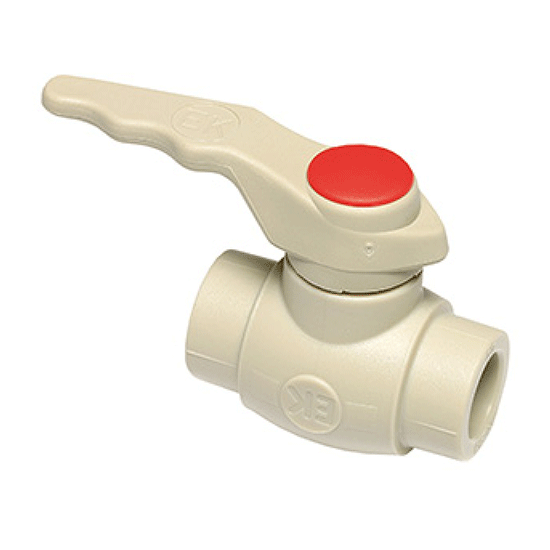
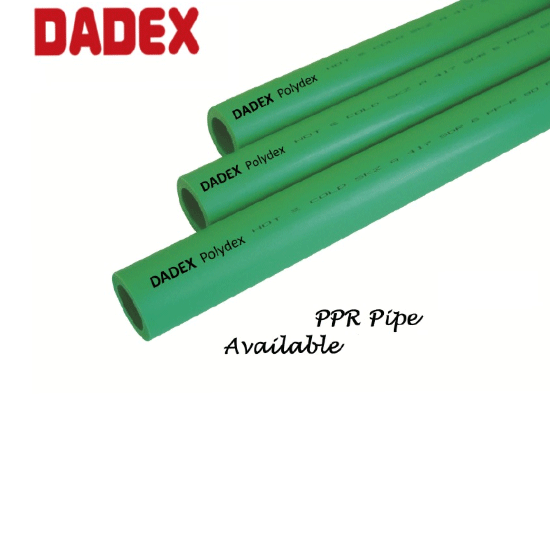
PPRC stands for Polypropylene Random Copolymer. It’s a thermoplastic pipe material joined through heat fusion, a process where the pipe and fitting are simultaneously heated until they melt slightly, then pressed together to form a joint that’s molecularly bonded. Done correctly, a PPRC joint is as strong as the pipe itself.
The key property that makes PPRC relevant is its temperature tolerance. PPRC handles both cold and hot water supply, typically rated up to 95°C at lower pressure, which makes it the standard choice for any system where hot water distribution is involved. Central heating systems, hot water supply lines in residential and commercial buildings, and industrial process piping where elevated temperatures are part of the operating conditions.
What UPVC Pipes Are
UPVC (Unplasticized Polyvinyl Chloride) is the dominant material for cold water supply in Pakistan’s construction sector. It’s joined with solvent cement rather than heat fusion, is lighter than PPRC at equivalent sizes, and handles the full range of pressure ratings required for residential and commercial cold water supply through its SDR classification system.
The limitation is temperature. Standard UPVC begins to lose structural integrity above approximately 60°C. For cold water applications, this is irrelevant. For any system carrying hot water under pressure, it’s a serious constraint that eliminates UPVC from consideration.
The Difference Between PPRC and UPVC Pipes in Practice
The difference between PPRC and UPVC pipes comes down primarily to temperature and jointing method.
- Temperature: PPRC handles hot and cold; UPVC handles cold only. This is the single most important variable in deciding which to specify.
- Jointing: PPRC uses heat fusion, which requires a pipe welding tool but produces extremely strong, leak-resistant joints. UPVC uses solvent cement, which is faster and requires no special equipment but depends on correct application technique for joint integrity.
- Pressure ratings: both materials are available across pressure ratings suitable for residential and commercial applications. UPVC’s SDR classification system offers more granular pressure specification across a wider range of applications.
- Cost: UPVC is generally lower cost than PPRC at equivalent diameters and pressure ratings. For cold water applications where temperature isn’t a factor, UPVC offers better value. For hot water, PPRC is the correct material regardless of cost comparison.
Burhani Traders stocks both, with the product knowledge to help you specify the right material for each part of your system rather than defaulting to one material for everything.
Conclusion
The difference between PPRC and UPVC pipes isn’t complicated once the application is clear. Hot water: PPRC. Cold water: UPVC. Mixed systems: both, specified correctly for each section. Getting that match right before procurement is always less expensive than correcting it after installation.
FAQs
Can PPRC and UPVC pipes be used together in the same system?
Yes, in buildings with both hot and cold water supply, PPRC handles the hot water lines, and UPVC handles the cold. The two materials use different jointing systems, so they don’t connect directly, but they can run parallel through the same building serving different circuits without any compatibility issues.
Which pipe material is more durable long-term?
PPRC’s heat-fused joints are arguably more reliable long-term than solvent cement joints in high-pressure applications. UPVC’s proven track record in cold water supply across Pakistani construction makes it equally dependable in its correct application.